Vehicles Extracted From Ditches and Accident Scenes
Wrecker Service in Odessa, the Permian Basin, and the Greater Texas area for disabled and stuck vehicles requiring heavy-duty recovery from Permian Basin highway embankments and oilfield terrain
Accidents and off-road incidents leave vehicles stuck in ditches, embankments, and soft terrain where standard towing cannot safely extract them. Wrecker-equipped trucks operated by Icon Roadside Assistance extract vehicles from difficult positions across Odessa, Midland, and highway corridors using high-load recovery techniques designed to lift and pull without adding stress to already-damaged structures. Highway and oilfield terrain in the Permian Basin creates extraction challenges because sandy soil, steep embankments, and limited access points require controlled pulling angles and stabilized lifting to prevent rollovers during recovery. Rapid scene clearance prevents traffic backup on busy corridors and reduces safety hazards created by vehicles blocking shoulders or travel lanes.
Crew members trained for high-load recovery position winch cables and lifting straps at reinforced attachment points on the vehicle frame, then use controlled tension to pull vehicles onto roadways or flat ground without dragging undercarriages across obstacles. The process involves evaluating the vehicle's position, soil conditions, and damage extent before beginning extraction to choose pulling angles that minimize additional stress on bent frames or broken axles.
Arrange wrecker recovery by describing the vehicle's exact position and surrounding terrain conditions.
What Heavy-Duty Recovery Actually Accomplishes
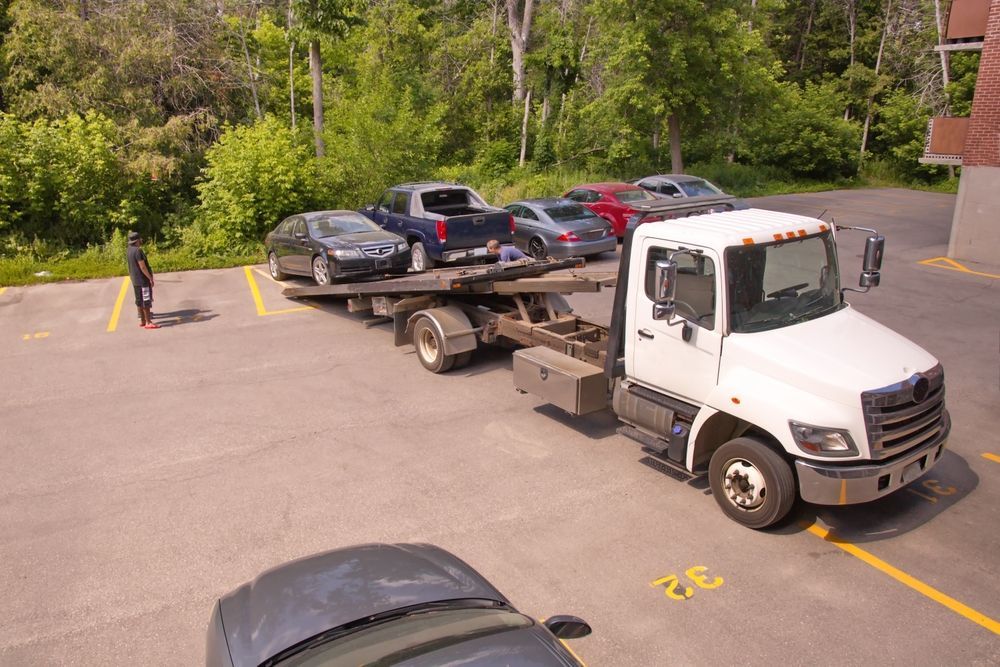
Extraction begins with stabilizing the wrecker truck itself, often using outriggers or wheel chocks to prevent the recovery vehicle from being pulled toward the stuck vehicle during high-tension winching. Cables attach to frame-mounted tow hooks or suspension components strong enough to handle pulling forces, and tension is applied gradually to avoid shock loads that snap cables or tear mounting points loose. Once the vehicle reaches stable ground, it is assessed for towing capability or loaded onto a flatbed if damage prevents wheel rotation.
After extraction, you regain access to the vehicle for damage assessment, and it can be transported to a repair facility or impound lot depending on insurance instructions or law enforcement requirements. The service manages concurrent police and insurance dispatch calls, indicating experience with accident-scene protocols and documentation requirements that affect claim processing and liability determination.
Wrecker service focuses on extraction and recovery, not mechanical repair or damage assessment beyond what is necessary to complete safe removal. Team reward systems indicate steady demand and established procedures for handling multiple simultaneous calls during high-accident periods or severe weather events that increase off-road incidents.
Frequent Wrecker Service Questions
Recovery calls increase during rain events when highway shoulders become soft and vehicles slide into drainage ditches, and during low-visibility conditions when drivers misjudge embankment edges on rural Permian Basin routes.
What situations require wrecker service instead of standard towing?
Wrecker service is necessary when vehicles are stuck in positions where wheels cannot roll freely, when extraction requires pulling against gravity or terrain resistance, or when accident damage prevents safe towing without lifting the vehicle completely off the ground.
Why do oilfield terrain conditions complicate vehicle recovery?
Sandy soil and caliche layers common in Permian Basin oilfield areas provide unstable footing for both the stuck vehicle and the recovery truck, requiring careful positioning and sometimes multiple pulling angles to achieve extraction without the wrecker becoming stuck as well.
When should I call for wrecker service after an accident?
Call immediately if the vehicle is blocking traffic, leaking fluids, or positioned unsafely on a shoulder or embankment where it could shift further or be struck by passing vehicles.
What documentation does the wrecker crew provide after extraction?
Recovery service typically includes a towing receipt with vehicle identification, pickup location, and delivery destination, which insurance companies require for claim filing and law enforcement may need for accident reports.
Icon Roadside Assistance operates wrecker-equipped trucks as part of a dispatch network handling emergency recovery calls across the Permian Basin day and night. Call with your vehicle's position and condition details to confirm equipment availability and estimated response time.