Vehicles Extracted from Ditches and Soft Ground
Winch-Out Service in Odessa, the Permian Basin, and the Greater Texas area for stuck vehicles on off-road paths, muddy lease roads, and steep embankments
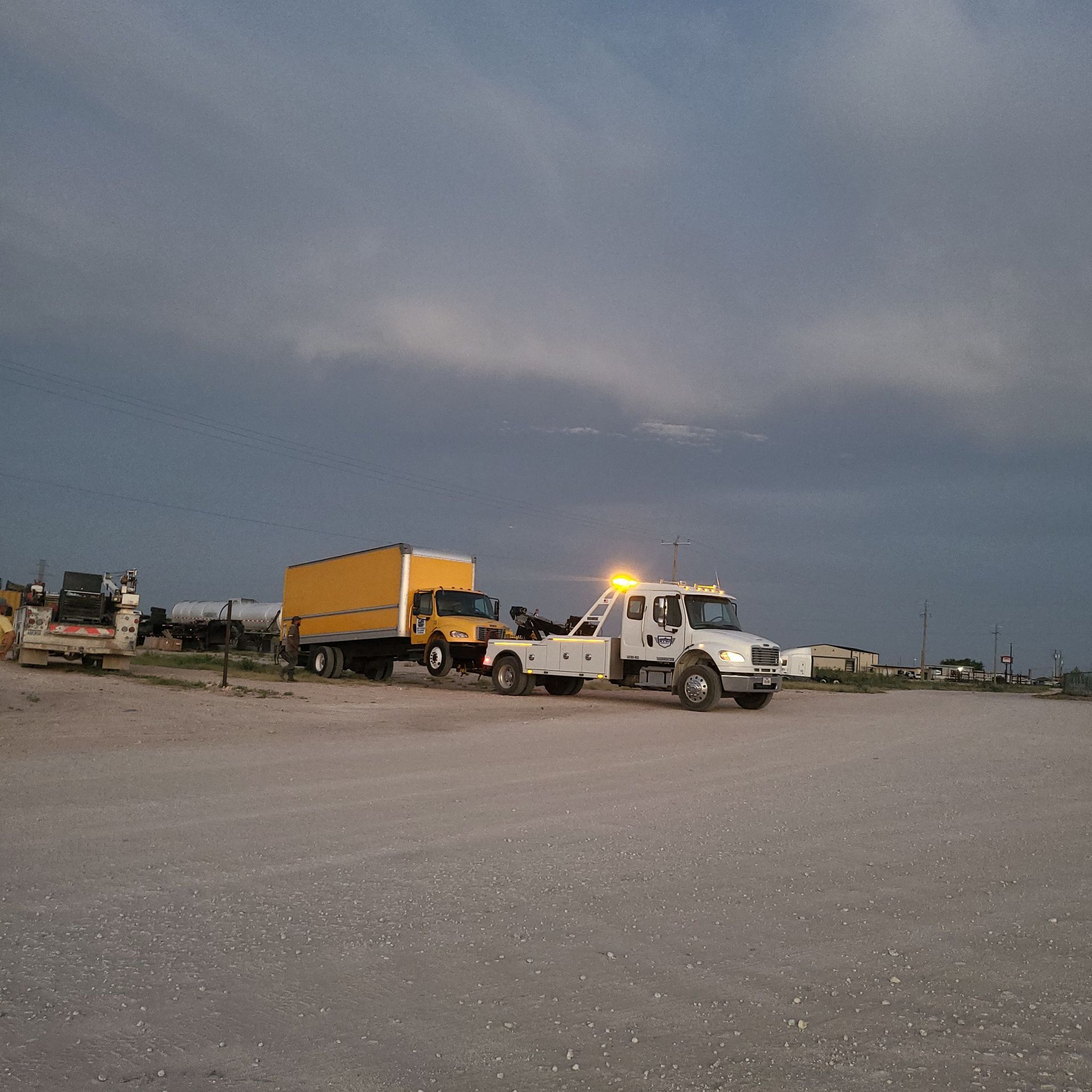
Vehicles become immobilized when they leave paved surfaces and sink into soft ground, slide into drainage ditches, or lose traction on steep grades common across oilfield access roads and remote highway zones throughout the Permian Basin. Icon Roadside Assistance operates professional winch-out recovery using high-capacity winch systems mounted on specialized recovery vehicles, with operators trained in safe anchor-point selection and controlled tension management required to extract vehicles. Oilfield operations zones and remote roadside locations present unique challenges where conventional towing cannot access the disabled vehicle until it is pulled back onto stable ground.
The extraction process begins with anchor-point assessment to identify stable connection points on the stuck vehicle's frame or tow hooks, followed by winch cable routing that avoids obstacles and maintains pulling angles that prevent lateral sliding. Load stabilization techniques control the rate of extraction, preventing sudden jerks that snap cables or bend suspension components when the vehicle breaks free from mud suction or loose caliche.
Arrange winch-out recovery by describing your vehicle's position, the terrain type, and how far off the roadway it sits.
What Changes After Winch Extraction Completes
Your vehicle returns to solid roadway surfaces where you can assess mechanical damage, check tire inflation, and determine whether it is safe to drive or requires additional towing to a repair facility, with operators providing honest evaluation of suspension alignment and drivetrain function after high-stress extraction. Precise winch extraction and anchor-point assessment can help with preventing additional body damage that occurs when improper pulling angles twist door frames or crack bumper mounts during recovery attempts.
Once extraction is complete, you notice the vehicle sits level on firm ground without the tilted stance or wheel-well contact that indicated stuck conditions, with mud and debris cleared from undercarriage areas that affect brake function and exhaust routing. The recovery leaves your vehicle in a position where standard towing equipment can engage if mechanical problems prevent self-powered departure.
The service does not include mechanical repairs or tire changes required after off-road incidents, but operators carry basic tools for immediate safety concerns such as loose battery cables or disconnected air intake hoses that prevent engine starting after extraction stress.
Frequently Asked Questions:
Drivers who venture onto oilfield lease roads or attempt shoulder parking in soft ground often face recovery situations requiring specialized equipment and knowledge.
What happens during anchor-point assessment before winching begins?
The operator inspects your vehicle's frame rails, tow hooks, and suspension mounting points to identify locations strong enough to withstand pulling forces without bending, then selects winch cable routing that avoids sharp edges and hot exhaust components.
When should I request winch-out service instead of attempting self-recovery?
Winch-out becomes necessary when your vehicle sinks past the axle centerline in mud, when wheels spin freely without gaining traction, or when the undercarriage rests on ground contact that prevents tire engagement.
What terrain challenges are common on Odessa oilfield access roads?
Caliche surfaces that appear solid but collapse under vehicle weight when saturated, bar ditches with steep angles that trap low-clearance vehicles, and sandy stretches near pipeline crossings where conventional traction fails completely.
How is winch-out service priced for off-road recovery?
Rates include base dispatch and equipment setup, plus hourly labor reflecting extraction complexity based on vehicle position, terrain stability, and distance from the nearest anchor point strong enough to support pulling forces.
Icon Roadside Assistance handles stranded vehicles in oilfield areas and remote highway locations using winch-specific equipment designed for high-tension extraction work that standard tow trucks cannot perform safely. Call dispatch with photos showing vehicle position and surrounding terrain to help operators assess equipment needs before arrival.